Schools are full of visible and invisible relationships. We see grades, behavior, attendance, and lesson plans. Yet behind these, there are loyalties, group tensions, family histories, and role confusion shaping how people learn and teach. This is where systemic constellation tools can help.
Systemic constellation tools help us see patterns in relationships, roles, and belonging that often stay hidden in school life.
In our experience, these tools are not about labeling students or turning classrooms into therapy spaces. They are structured ways to notice patterns. A child who refuses to work may not only be resisting content. A teacher in conflict with a class may be carrying pressure from a wider school culture. When we look systemically, new options appear.
What is unseen still acts.
What these tools mean in education
In education settings, systemic constellation tools are used to map relationships and positions inside a group or institution. We may work with students, teachers, leadership teams, or even parent groups. The goal is simple. We want to identify where connection is blocked, where roles are blurred, and where exclusion may be affecting learning.
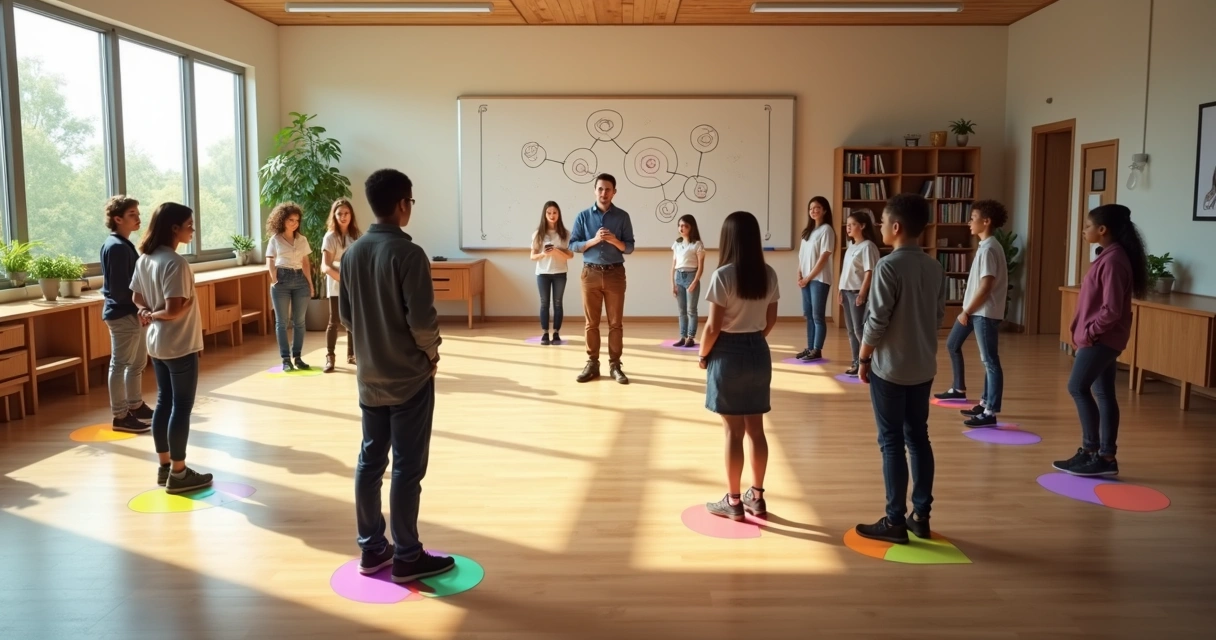
These tools often use space, symbols, cards, chairs, or simple role markers. For example, a team may place cards on the floor representing “student,” “teacher,” “family,” “curriculum,” and “school rules.” By observing distances, reactions, and comments, we begin to notice patterns that ordinary meetings miss.
A higher education study on systemic structural constellation methods in learning and sustainability problem-solving found that 50% to 75% of participants saw them as a meaningful supplement to traditional approaches. We think this matters in education because schools also need holistic ways of seeing complex problems.
Where schools can apply them
We have seen these tools fit best when the issue is relational, repeated, or hard to solve through rules alone. Not every school challenge needs a constellation. But some do.
Useful settings include:
- Classroom climate and peer conflict
- Student belonging and exclusion
- Teacher team tension
- Leadership alignment
- Transitions between grade levels
- Family and school communication patterns
Let us picture a common scene. A school says one class is “difficult.” The same students are named in every staff meeting. The staff grows tired. The students feel watched. Nothing changes. When the team maps the system, they may find that the class has become the container for wider stress in the school. That shift in perception can soften blame and open wiser action.
How to start in a safe way
We think caution is part of good practice. Schools are not clinics, and educators should not force emotional exposure. A safe start is small, clear, and practical.
In schools, systemic tools work best when they support reflection and decision-making, not when they push students into deep personal disclosure.
A simple starting sequence can look like this:
- Define one concrete issue.
- Name the people or forces involved.
- Represent them with objects, paper, or positions in the room.
- Observe distances, absences, and tensions.
- Ask what role confusion or exclusion may exist.
- Choose one grounded action to test.
Notice the last step. We do not stop at insight. We connect it to action. That may mean changing seating, clarifying roles, involving a family member, or reviewing a policy that creates repeated friction.
Practical tools educators can use
Many educators feel relief when they learn that they do not need a dramatic process. A few careful tools can already help.
One useful tool is the relational map. We draw a class or team and place names or symbols according to closeness, conflict, or isolation. This works well in staff reflection.
Another is the role-position exercise. We place labels such as “teacher,” “student,” “parent,” “coordinator,” and “expectation” in a room. Then we ask participants what they notice from each position.
We can also use sentence completion in a systemic way. Prompts such as these often bring hidden patterns into language:
- “In this class, who is often left out?”
- “What pressure is this student carrying?”
- “Which role is trying to do too much?”
- “Who needs to be seen or heard for this to settle?”
Sometimes the strongest moment is quiet. A teacher looks at the map and says, “I just noticed we keep talking about the student, but not about the change in leadership that happened this year.” That is not magic. It is pattern recognition.
Blame hides structure.
Conditions that make the work hold
For these tools to help a school over time, the wider environment matters. One workshop will not change a culture by itself. We need support, follow-up, and records of what is learned.
An evaluation of 25 school networks focused on sustained improvement found that leadership support, ongoing professional learning, and solid documentation were tied to stronger team effectiveness over time. We see the same logic here. If school leaders support reflective practice, if staff can keep learning, and if insights are tracked, systemic work becomes more than a one-time event.
Leadership support, ongoing learning, and documentation make systemic practices far more likely to last in schools.
Boundaries and ethics
This part deserves care. We should not use these tools to expose private family stories in front of a class. We should not make claims we cannot support. And we should not pressure children to take symbolic roles if they feel unsafe.
Good boundaries include:
- Working with present school issues rather than private investigation
- Using voluntary participation where possible
- Keeping language respectful and non-diagnostic
- Referring students for extra support when needs go beyond education staff
We also think timing matters. A staff team in acute conflict may first need clear agreements and calm structure before systemic reflection helps. The tool is only as good as the context around it.
What results can schools expect?
Results are often subtle at first. A teacher sees a student with less judgment. A leadership team notices that two departments are working from mixed expectations. A student who felt outside the group is given a clearer place. These shifts can change behavior because they change meaning.
We should be honest, though. Systemic constellation tools are not quick fixes. They do not replace pedagogy, planning, or student support systems. What they can do is reveal why the same issue keeps returning, even after many attempts to solve it.
Conclusion
When we apply systemic constellation tools in education settings, we are choosing to see the school as a living network, not just a set of separate problems. That choice changes how we respond. Instead of asking only, “Who is the problem?” we begin asking, “What pattern are we inside?”
This shift can bring more clarity, more humility, and better decisions. In our view, that is where these tools show their value. They help educators see what ordinary discussion can miss, while staying grounded in daily school life.
Frequently asked questions
What is a systemic constellation in education?
A systemic constellation in education is a structured way to look at relationships, roles, and hidden group patterns inside a school, class, or team. It may use space, objects, or role markers to show how people and forces are connected. The aim is to make hidden dynamics easier to understand.
How do I apply these tools at school?
We suggest starting with one clear issue, such as a class conflict or a repeated team tension. Then represent the people or factors involved with cards, chairs, or positions in the room. Observe what appears, ask calm questions about belonging and roles, and turn the insight into one practical step.
Are systemic constellations effective for students?
They can be helpful when used with care and proper boundaries. Their value often lies in improving belonging, reducing blame, and helping adults understand patterns affecting students. They should be adapted to the age group and never used to force personal exposure.
Where can I learn more about these tools?
A good path is to look for training, reading, and supervised practice focused on systemic work in education or group settings. We advise learning from settings that stress ethics, clear boundaries, and practical school application. Start with small uses before bringing the tools into wider school work.
Is it worth it to use constellations?
Yes, when the issue is relational and keeps repeating despite normal interventions. These tools can help schools see patterns that are hard to notice in ordinary meetings. They are most useful when paired with thoughtful leadership, ongoing learning, and concrete follow-up action.